The Blackhole lab: when information is present but cannot be read
Information can be fully present and still unreadable. When does that happen, why, and what does reading it cost? Black holes are the most developed physical theory of that question. The lab studies them as physics, and uses them as a source of tools for keeping collectives of AI agents auditable, which is its long-range aim.
A working frame
The lab works with three axes, as a working hypothesis rather than a theorem. Location: is the information held in the parts of a system, or only in correlations between parts? Capacity: how much can move, limited by light cones in physics, by min-cuts (the narrowest set of links that separates one part of a network from another) in networks, and by bandwidth in agents. Mismatch: how well the reader’s model of the system fits the system.
Bounds that hold in one direction make the frame usable: each says what a reader cannot know, given a stated limit. The deepest open problem is that no law yet joins the three axes.
Scale of the record
- 232 automatic reproduction checks, all passing; the full test suite has 675 tests (2026-10-13).
- 18 pre-registered hypotheses, each with a file that records its prediction before the data.
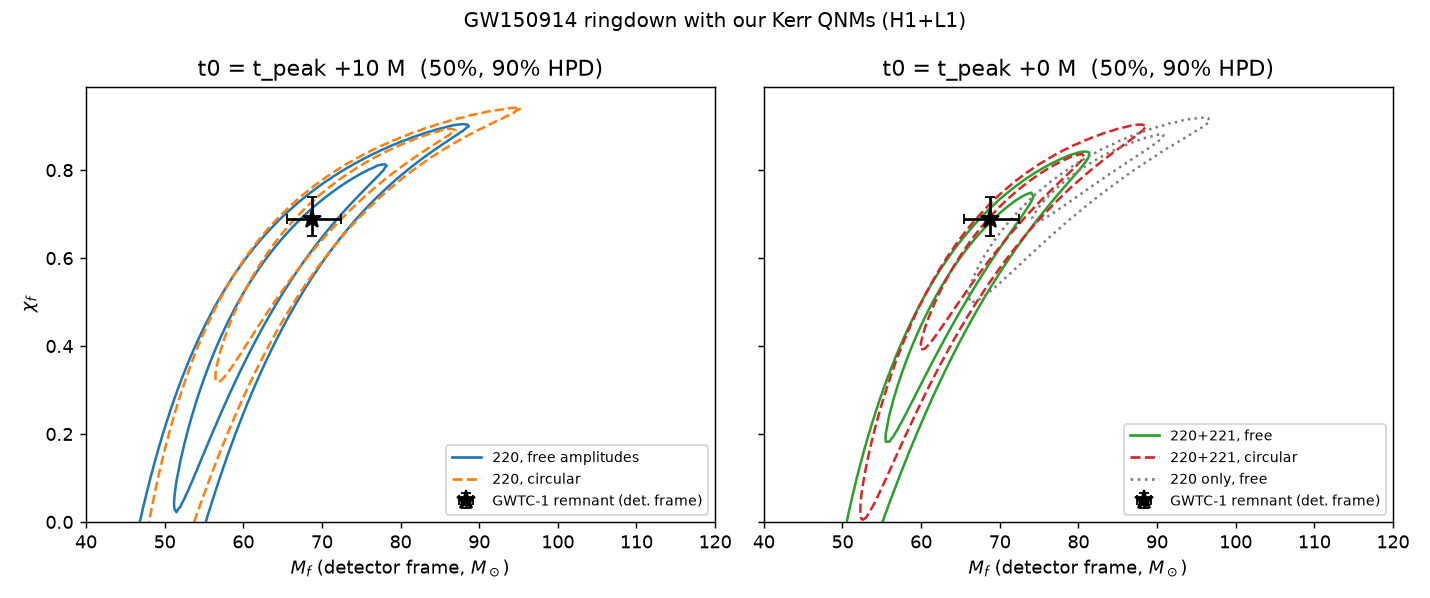
- 2 real gravitational-wave events analysed from public LIGO data.
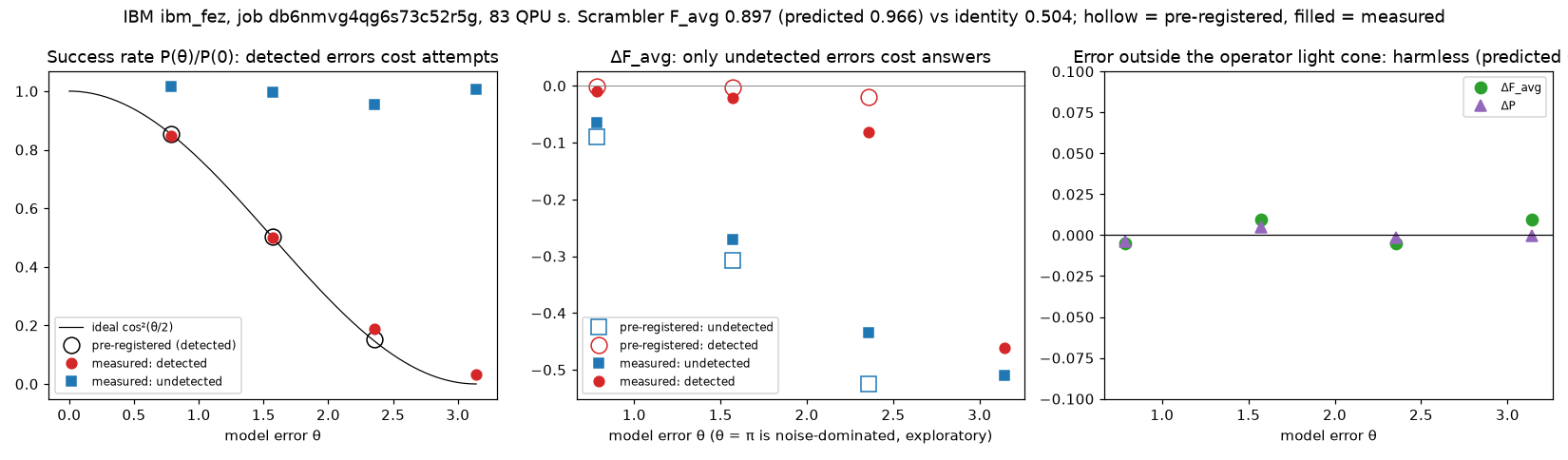
- 1 run on quantum hardware (IBM ibm_fez), with a second round pending.
How to read the claims
Claims on these pages carry two tags where the lab’s record assigns them. Confidence: proved, verified (an independent method or a reproduction), observed (one pre-registered method) or suggestive. Novelty: known (published by others first), narrow (the core is known and a stated part is the lab’s) or ours. A test that can fail in one direction only certifies its violations; when such a test passes, these pages say it passed, never that something was certified.